Sunday, January 20, 2008

Drug Free School Zones?


What's the deal with some signs?

Most signs have a directly discernible intent, whether it be to advertise a business, or inform a driver, or give direction.

There are some signs though, that I'm not really sure about. I see one of them around quite a bit. It's the "Drug Free School Zone" sign. You've seen it. (here's an iStockphoto of one)

I don't really understand this.

Who is this for? What's the purpose of such a sign? Is it true?

If this is meant to be a statement of location or condition, akin to "This is the Santa Fe Trail" then how do I even believe it? Is this school zone really drug free? How do they know that it's true? Do they regularly do drug screenings? Go house to house and make sure everyone is clean? Just putting up a sign doesn't make it so.

And who is this for anyway? Passers by, homeowners, school kids...drug dealers? Assuming that the function of a sign is to inform, it's hard to know just who the audience for this one is.

In terms of supply and demand, this could be an advertisement for nefarious characters. "Hey, we've got no drugs here in this area... the market is wide open for you, the drug dealer looking to expand your market, and there's no competition here yet - hence the sign ... welcome!"

Wouldn't it be more effective and honest if there were a sign like "increased drug law enforcment area" or "drug related offenses doubled" or something. It's the drug free part that seems silly to me. The sign just sits, whether a drug deal is happening right there or not.

If it's talking about a law - well, in terms of illicit and illegal drugs, aren't all zones of the US supposed to be drug free? (Unless, perhaps, you're a peyote toting Native American) This sign doesn't really create or inform of any special laws that I'm aware of. Why create a sign like this? It's not like there are signs for "Drugs OK School Zone." Like designated smoking location. This is a Dooby Do Zone. Go ahead, pot head. Mmm-no.

So, I don't get it. It's it just wishful thinking? Saying something in the hopes that it will self-produce that happy state? Not sure.

Just a small question. One of those things around that I don't really understand, but thought it would be nice to not understand it together. Not that anyone is reading this.

Thursday, December 13, 2007

A Year Later

Not quite a year ago, my Dad died.

Just wanted to re-visit some perspective on it, which I still hold to. Lots of my friends seem to have been going through similar circumstances, so I wanted to plunk this down.

From January 8, 2007

It is a strange thing to lose a parent – to see your father die. All the family is here at home making funeral arrangements for a man who we half expect to come walking down the steps at any moment to join us. It is the finality of the parting that feels most strange. As I write, I recall that exactly one week ago we were all together celebrating the new year and a delayed Christmas. How different the gathering in the living room feels on this Monday.

My Dad began to take his faith more seriously during the last 5 years. I had no doubts as to where he is. I also had the honor or writing him a tribute letter before his open heart surgery in May. There have been many things leading up to this week that provided some closure for all the family. Still – we feel the loss.

People will often say (and I’ve probably been guilty of it in the past) that “death is natural – it’s a part of life.” It is not true. We were not meant to die, to leave work undone and part company with those we love. Death is most un-natural. We are made for eternity and for relationship. And so, right now despite our pain and grief, we see Jesus’ gifts of life, eternity and future reunions as all the more amazing and beautiful. The finality of death and separation has been revoked for those that know God. We feel it now, but I will see my Dad again. We will have a very happy reunion and an eternity of relationship. That is what awaits us. How gracious our God is!

But for now, I will cry. Quite a bit.

Tuesday, August 28, 2007

Fuzzy Lines

I recently rented and watched Mel Gibson's Apocalypto, and despite the bloodiness of it, rather enjoyed it. Very well done. But this isn't a movie review entry.

Here's what is interesting to me in this - the viewpoints and reactions that I've read about the film. Let me zoom in on one that made me laugh out loud.

If you look up Apocalypto on iTunes and read reviews, you'll find an entry by Baern titled "Decent movie. Highly misrepresents the Mayans though" What I want to pick on is one of his comments. I'll quote it...

"Another issue is how the sacrifice ritual is seriously misrepresented and exaggerated. Mayans didn't sacrifice a bunch of people all in one day; they sacrificed one person every couple weeks or so. The movie makes them look like bloody monsters!"

The movie makes them look like monsters!? I had to laugh at the absurdity of it. Here's the logic:

Gibson portrayed Mayans as monstrous. How?
He depicted them as performing multiple human sacrifices in one day.
Baern says this is unfair: They are not bloody monsters. Why?
In reality, they only sacrifice about 2 human beings each month.

!?!

That's what I call a fuzzy line. (Granted, this was probably an off the cuff, not too thought out review, but whoa!) Baern is saying that the Mayans were not really monstrous, they didn't kill large numbers of people to appease their gods, they killed them at a much lower rate - only one every 2 weeks or so.

Baern seems to think that what makes a human-sacrificing culture egregious is found in the quantity of human sacrifices, not in the fact that human sacrifices are taking place. C'mon Mel - I can't believe you depicted Mayans as cruel people. It's not like the killed people every day! Just some days. Jeez! For Baern, Mel crossed a line he'd drawn.

We get what I call a fuzzy line when we begin making moral distinctions based on subjective opinions of "appropriateness." The lines seem to revolve around numbers, severity, or frequency of some kind of behavior and what I think is too many, too much or too often - it's fuzzy because people draw the line of right and wrong so differently.

I think it's human nature that, much of the time, we'll draw our own lines of "here is where too far, too much begins" but we base the moral location of those lines just below where we perceive ourselves on the continuum of morality.

In other words - when we decide for ourselves what is right or wrong, we rarely will self-condemn. We consider ourselves pretty good, and "wrong" must be something less than our own personal goodness.

The problem with that is that we all have different perspective on what's too far. If we base right and wrong simply on personal preference, should we condemn perverts, or violent men or financial scammers?

You could, and people do, argue that what we do is go with the good old American majority system. That would counter "obviously" egregious behavior. Let the voice of the people determine what's right. We're call something normative if there's a majority that agree it's ok. Of course, this thinking breaks down when the majority is wrong. (which, I suspect is a lot more often than we care to admit - consider 80's hairstyles) If we based our laws and morality on such a system, we'd have no such thing as speed limits. We might also have a problem when it comes to slavery. The majority thought it was good. The majority was wrong.

What we need are non-subjectives in terms of right and wrong. We need someone outside of ourselves to establish objective rules, truth, right and wrong. We need a standard to measure by.

I recently installed baseboards in a bedroom of my house. If I had a guy making cuts for me on the compound miter saw and I was telling him how many inches and at what angles I need the cuts, I would in no way want to have subjectivity about how long an inch is. I was us to operate on the same system, with the same establishment of standards. Otherwise, I would probably get some rather useless pieces of baseboard.

I think the same is true for those fuzzy lines of morality. Baern's complaint about Apacolypto was in terms of how many human sacrifices made a culture barbaric. Two per month, to him, didn't seem that horrible.

The presence of human sacrifices makes the society barbaric. The conversation about how many they make falls under the heading of frequecy, not in the debate of whether it is monstrous or not.

The conversation about whether we are, as human beings, good and righteous seems (in my mind at least) to be pretty clearly answered. (look at history!) When I compare myself to others, I think I'm talking about he wrong issue. Complicity and comparison are two different things. I think we would be better served if we talked a little bit less about comparitive morals, and talked a little bit more about the fact that we're all in the same camp and don't measure up to the standard of Good and Rightous and Whole. Those are more productive and more interesting conversations.

Sunday, July 22, 2007

Murk

Oh murky heart:
What lurking monsters lie
twisted and billowing
beneath your solemn surface?

Only to me faintly known.

Still they seem;
Unseen and poised.
Until unbid perturbants disturb
their tulmultuous serenity,
and extract a toothy toll!

Cooling, clearing water come!
That these muddy monsters,
plain made, may be speared!
By some Fisherman of men.

And I'll be fully known!

30

I think this is my 30th post.

If this were my job, it would only be about a month's worth at 1/day. Perhaps I don't have much to say - or perhaps in each blog I say too much. Long-windedness. Ugh.

Right now I'm in Colorado. (which, incidentally, some native Coloradans will emphatically insist that you should pronounce incorrectly. Why anyone would want to take a nice, open and pleasant Ahh sound [as in Avocado] and replace it with a hyper-nasal American Eah [as in yeah] is beyond me. Good night! We make such gross vocalizations in the US as it is!)

Ok - shorter John, shorter.

Right now I'm in Colorado. Been here most of the summer. One of the things I think I like most isn't really attached to the state. It's the sky.

Perhaps I've had more time to notice. Perhaps the flatness just before the mountains makes it more accessible to the eye. Perhaps it's better here? (altitude?)

In any case, the sky just seems to beckon me to look - and snap a few photos now and again. I've seen many spectacular sunsets, rainbows, storm systems, billowing clouds, cobalt skies... it's been pretty soul-satisfying.


I remember a bunch of years ago, again in Color(eah)do, I was camping in a local river canyon with some friends. I've been in the country before, but never quite this remote - far, far from any other lights. It was the first time I fully grasped what the term "milky way" pertained to. (other than the chocolate encased fluffy whatever-it-is) I had no idea that there were that many stars visible to us. It really was a creamy swathe in the sky. I was DAZZLED by the heavens above. Innumerable, Incredible, and sadly - Invisible, at least for most of us, most of the time.

Doesn't it seem ironic that the little lights that man makes, so obscure the great lights of the heavens above? The garish eclipses the glorious?

It's been a refreshment for me to again lift up my eyes and look to the heavens this summer - day or night. Our little lights, our little glories just don't have the awe-ing power that a breathtaking sunset has. Or the sensory feast of a fast moving evening thunderstorm. Or the canopy of glimmering, exploding stars - stretched and spinning and the farthest reaches of my eyes.

When's the last time you stopped, looked up and took it in? We're walking around on a Master's canvas, and we so infrequently take a moment to absorb the inexhaustible brilliance in which we are enveloped. Oh - sad, sad we.


Sunday, June 17, 2007

Bird in Hand

I'm writing this from Colorado. (whoo-hoo!)

Every two years or so I travel to Colorado for work, staying there for a significant amount of time. I love it here. If you've never visited, you should. I'll leave it at that, because Colorado is only the context for my comments, not the subject.

Two years ago here in Colorado I was sitting about 15 feet up in a tree. I had some time during a training session where I was challenged to go reflect on my personal life and how I was doing; spiritually, emotionally, relationally...etc. There was a beautiful and climbable tree nearby and I figured that was just as nice a place to think about myself than any. I was wrong.

What happened was that I wound up just soaking in the natural world around me. I couldn't quite stay focused on personal inventory. I was too absorbed in the tree, the sound of the wind, the dappled heat of the sun. The front door of my mind was locked, and my (often odd and meandering) internal dialogue just wasn't happening. What I would discover later is that the lessons that day (and I think, most days) come better through the back door of our minds - informally and somewhat unexpectedly, like an old friend popping in for a visit. My lesson that day would come, rather oddly, through two birds - the first of which landed just above me in the tree.

Very Large Tangential Aside: I like the idea of back door paradigm change. I like the analogy and I like the mechanisms of the uncontested entrance. What I mean is that when we want to challenge someone else's thinking and viewpoint, with the intent of changing their minds about some subject, we who are not so shrewd (especially Christians) tend to approach people at the front door. By this I mean, we come formally and directly - on topic with our best argument forward.

The problem? Door to door salesmanship is dead. Growing up at my parent's house, if people came knocking on the front door, we put our guards up. It would invariably be someone selling something, or wanting something, or a Jehovah's Witness. (there's a whole 'nuther blog topic!) Our goal when we answered the door was generally to dismiss them. (if we answered the door!)

Friends came to the back door. It was never locked. It was just a screen door - not a huge formal front. When someone showed up at the back door, we weren't guarded or defensive - we were ourselves. Maybe you didn't have a home like this, but I did.

If you really want someone to change their thinking it will generally happen incrementally, and you need to sneak in the new view around back - through a joke, a story, a movie, a comment - some vehicle that carries within it a different world-view. Rather like a Trojan horse, but not in a "let's decimate the city" way. Something appealing which has, implicit within it, a viewpoint or moral or message.

Stories do that. Movies do that. I think many people don't look at what they watch on TV or in theaters and ask the questions: What is the moral? The point? The Worldview. The fact is that all stories contain one, in one fashion or another. And there is the back door teaching and shift. When you or I watch or listen to or hear something without discerning what it teaches us, we are unconsciously hearing, at least in part, the viewpoint and beliefs of another. They are making their argument through the backdoor, where we are not consciously holding up our viewpoint to theirs and evaluating. It's coming in, albeit by increments, uncontested.

I'm not saying this is bad necessarily. What I'm saying is that it's shrewd and effective - over the long term. What I do think is bad is when you or I never give thought to this effect. I'm more likely to actually think about the viewpoint of, let's say, a Jehovah's Witness if it's given to me in a creative and gentle manner, rather than through a front door assault which makes put up defenses. I DO want to hear another person's viewpoint and worldview, but I don't want it to be forced and awkward and assaultive. I also don't want someone sneaking it in with zero awareness on my part. That feels like brainwashing and manipulation.

I guess what I'm saying is for real communication and life change to happen in the realm of how we understand the world, we're overly guarded to directness and underly aware of subtlety. What I need to do if I want to communicate effectively is knock on the back door. I need to communicate in a way that doesn't raise walls on the hearer's part, but also doesn't skulk about not showing my intent.

Maybe I'm nuts, but this is what I would most like to do. How? That's the real issue. At any rate, back to the tree I was in (it relates)....


So, a small bird (a sparrow, if you care) landed just above me in some of the branches. The first thing that popped into my head was "wouldn't it be cool if that bird would just come and land on my finger or hand - just for a few moments." So, on a whim, I said, out loud "God, it would be so cool if a bird would land in my hand - just a silly little selfish request." And I held out my hand - in an act of faith.

What happened next was unremarkable: My arm got tired.

Or maybe the bird took off. I can't really remember. Oh well, guess the answer was 'no.' A few minutes later I went back to the session I was a part of, having enjoyed the stay in the tree, but with little in terms of front door reflection on my life and what I need to work on.

The back door lesson came later, and I didn't even realize it right away.

That afternoon I rode my bike to pick up a rental car - I couldn't get a ride. The crazy thing is that it was well over 100 degrees that afternoon and in Colorado where there's much less atmosphere between you and the sun, it's intense.

Riding down a small side road I saw a bird in the middle of the street - another sparrow. As I approached I expected her to fly away. She didn't. As I passed I got a closer look - this little bird was probably overheated. It sat almost motionless with its mouth agape, baking on the asphalt. I kept riding another few seconds when compassion got the better of me.

There was no traffic so I went back. The bird never protested or fled as I approached, I scooped it up and place it in the coolness of some dense bushes at the side of the road. She never struggled or seemed afraid. She just hopped off, almost gratefully, into the shadows.

Probably a full 60 seconds later I answered the knock at the back door of my mind. "Hi!" said the friendly visitor, "Just stopping by to ask you a few things real quick: Didn't you pray a little while ago that you'd hold a bird in your hand? Hmm. Well, what's it tell you about yourself and about God (to whom you made this request) that your desire to experience something you thought would be neat for you was answered, a little different than you expected, and was used to secure the benefit of another?"

There were more lessons I learned from that little back-door experience than hours of front door contemplation could have yielded. And those lessons stick.

Tuesday, April 24, 2007

Stoicism, Blame, Speculation, Blindness, Absurdity and the News

Virginia Tech just happened a week ago. April 16, 2007.

For my part, I am shocked - but not surprised. This sort of thing fits right into my world view, so I am not taken off guard by these events, but I am horrified and wounded by them.
I've cried a bit, even more so because I have friends who work there - friends who personally knew students that were killed.

Since this has dominated the news media for the past week, I've about had it with a few characteristics of the networks and news mills as they drone on and on. Yes, I need to know that it happened. Yes, I want to know more fully the details of these events. Yes, it is all worthy of commentary and processing. Yes. But...

There are a few things about the news media that have been the passing of the kidney stone for me this week, and I guess (to push the simile too far) that this is the place where the stone hits the water for me. This will be where I get them out of my system. Relief at last! Some you will think unfair, irrelevant or unlikely to change - but this is my blog. Go write your own.

So - as per the title of this installment....

Stoicism. When I first began to realize just how gigantically tragic this shooting spree was, not to mention the methodical manner in which is was carried out, I realized this was a horror we've not yet known - well, we have, but to a scale we've not yet experienced. In this case, what I wished for was someone on the TV to shout "Oh no! This is unbelievable! There is something terribly wrong with this world! This is horrible, absolutely horrible! Oh God, please help them." and weep. Or have an expression of anguish, or tears, or be visibly sickened - something - anything.

I could see some emotion, or hear it. But for news like this I just wish there was a value for empathy, expression and appall. The anchors were so controlled and composed. The soundbites so polished and formal. When there is a tragedy, I want someone who will feel it with me, I want someone to weep for that which is unjust and terrible. I don't want a composed professional. I want someone who will be human and feel it deeply.

That one is all me, and I know this isn't something that will likely change. I just hate that the rawness and emotion of it gets filtered into a news blurb. Unfair you say? - maybe.

Blame. That's really the point - right? At least that's what comes out of the gates pretty early. The shooter killed himself, so whom shall we blame?

Within hours I heard/read/saw reports on things like: The inferior-to-other-schools' security on campus. The lack of an immediate lockdown orders. The ease of purchasing weapons in Virginia. The mother, the father. That he wasn't expelled for previous issues. The mental health system not confining him. His fellow students lack of interaction with him....on and on.

Message: It's about who we can blame.

A friend and co-worker of mine said it well. He mentioned that the news, and many people, seem to take the view that the world is not messed up, and for the few things that seem to be amiss, if we just have the right systems in place it can be perfect. No it can't. No way. We live in a corrupted world, and systems of control and safety are good, but they can't change the very nature of the world. We need something beyond us for that.

But - it's much more convenient to blame someone or some thing - or better yet: some system for screwing up in this case. It's not that this world is fallen, it's just that X screwed up. And now, back to our illusions of goodness. Perhaps this is more of an American bubble. We don't really know pain and chaos like many other places in the world.

Speculation. I'll keep it short. It seemed like, in an effort to fill space, that the media is willing to throw any speculations it can out there to keep you roped in. After all, the news really is about having the latest, greatest news, so they can have the most viewership, so their sponsors (and more sponsors) will generate more revenue.

So, since it's a business and the business is selling (semi-sensationalized) information (sometimes true information) the model seems to be 1. report what you know 2. Make lots of show-stopping speculations and leaps about what you don't and 3. buttress correct (or close) speculations with later facts as they arise, ignoring your ridiculous guesses.

I'd rather have truth, undressed-up. But that doesn't seem to be sufficient anymore.

Blindness. See above a bit. Let's face it, right up there with journalistic integrity and the noble desire to disperse truth the the world, there is the need for ratings. Perhaps for some that is really the greatest commandment. To be most watched. (sponsored, payed, profitable - it's the same ball of wax)

So - to show the tapes the killer made? Are you blind? Don't you understand? Those tapes legitimize him. They encourage others. They validate his actions (not condone, but validate) and give him a voice to the masses. He was crazy, he was mentally unstable. To show that was - I hope - an act of blindness on the part of the networks.

I hope it was lack of wisdom. I really do, because the alternative is that they knew it would have a legitimizing and validating effect for other unstable people, but the value of sensationalism bringing ratings and viewership was a value higher than social responsibility and safety. I hope it was just stupidity and ignorance and blindness. But I have a feeling it was "let's show it anyway."

And that is not a good sign.

Absurdity. This is my biggest one, personally. I watched these horrible reports about bloodshed and death and tragedy - which were immediately followed up with.... a commercial. Whatever they were. A car ad, a food ad, a vacation ad...insert just about anything.

The contrast was startling. One moment I'm peering into madness, violence, loss and suffering... and then moments later I have some dulcet voice telling me that my life will be so much more fulfilling and worthy if I just have this kind of car, or eat these kind of cheese puffs, or use the makeup, this hair gel.....etc.

Anyone else see the absurdity of this? What's really important? It certainly comes out in an event like Virginia Tech: Love. Relationships. Courage. Health. Safety. Faith. Family. Life.

Pardon me, but who the hell cares about what shaving cream I used this morning? It doesn't matter. Half the stuff that is advertised is successful because people are overfed, under-challenged and bored to death. They've lost sight of what's really of value and buy the lines (carefully crafted) that "this is what you need to be fulfilled, happy, and have sexy partners dangling from your arms."

Never has our self-indulgent consumerism seemed more crass and absurd than in the midst of the news last week. What brand of toilet paper I use doesn't matter. It really doesn't, but we're constantly being pushed to believe that it actually makes a difference in the quality of our lives. What a sham. It's a lie.

So for my part, I'm remembering that...

  • We should know about recent events - but we need not make vast speculations about the unknown.
  • Finding someone to blame only ignores the real problem - the world really is broken.
  • Truth is satisfactory - in the order and portions that it comes, and sensationalism is more theater than fact.
  • Blindness about our actions is sad, but preferable to knowledgeable disregard for their impact.
  • What's really important probably has little to do with what is advertised as being so.

For my part, I'm also praying for everyone at Virginia Tech - including the news-media, who will just move on to the next sensational something.

Sunday, March 25, 2007

Nudity on my Xbox

People get naked with me on my Xbox.

I'm baiting you with that - what I mean is that they are being who they really are. And that's what really disturbs me - sort of.

I have joyfully wasted many an hour playing video games online via my Xbox Live account. For any theoretical readers out there who theoretically don't know what that means, here's the super brief explanation. (sorry gamers) Basically, you hook your Xbox up to the Internet, then you can find other people playing the same game and play with/against them. The service that provides this arena is called Xbox Live through bungie.net, and I think I recently read that there are more than six million subscribers.

Anyhow, here's what I find sociologically and psychologically interesting: besides gaming, the online environment gives an arena for people to be who they really are.

I play Halo 2 mostly, and most people have a headset that allows them to speak and hear others speaking. (I can only listen) If you ever go online for any time I think you will be shocked by what you will hear - by what people say to each other.

I'm not talking about good old bad language and cursing. Shoot - you can go hear that in most places. (cable, for instance) What I'm appalled by is the content and intent of their speech. Slanderous, racially charged language. Threats and harassment that is sexual, mocking and vicious. Words bristling with ego and the debasement of others. On and on. Some people open their mouths and utter horrible, horrible things toward other human beings - willful malice and attempts to wound them.

Some might argue that this arena, this environment, provides a venue that encourages that sort of thing. I think this suggestion doesn't go far enough. I think that this online venue doesn't cause anything - it just removes something.

What it removes is the normal sense of public shame. There are no social repercussions for anything that is said there. I could use racial slurs, directed at a specific ethnicity, and there are no consequences. Others can sound off against me but there is no real world feedback, e.g. a punch in the face. If I were to talk to someone standing in front of me like that, I would likely be beat to a senseless pulp. And I should be. Online, people speak with others whom they will never meet, have no existing relationship with and bear no risk of accountability for their behavior.

That's what disturbs me most. When you have complete impunity, what comes out is really you. Social norms and fear of judgment restrict us from saying everything that pops into our minds. "Healthy people" filter out things that are socially inappropriate and may cause them shame. But it seems that when the fear of judgment or getting caught are removed, people will do and say some terrible things. Case in point - my cohorts on Halo 2. (And me. Let's be honest - though I don't slur racially, I've said a few things to opponents that I'm a bit embarrassed about!)

But what we call "healthy people" are just the ones that manage to filter out what they are really thinking, or would really like to say. The thing about people is not that they allow those things to come to the outside - it's that we don't; it's that all of us have those things on the inside, but with some self control, we can keep others from seeing that they're there. We can hide that which is bad. Behave well, though we're not thinking well. Our issue as humans isn't only behavior, it's also motivational and internal.

Jesus called us on it. If you're not familiar, he was talking and teaching about what real "goodness" is. He cites the external behavioral conventions and saying of the day; "you've heard it said...." then states what most people would agree on: Don't murder, don't be unfaithful to your spouse...etc. Then he ups the ante; "but I say..." and he moves us to the internal world - he gets to the (mostly) hidden reality of our hearts.

Read it for yourself. It's in the book of Matthew, chapter 5.

He seems to be concerned not just with how we act, but who we are - for-real, internally, when there is no fear of being caught or reprimanded, when we think we'll get away with it. That, I think is where we need to deal with who we are. That's the starting point; the heart. And that's the point, if we're honest, when we realize that our behavior might point to being a good person, but our inner thought life...we might not be all that good.

This is the starting point - our reality of need, rather than the illusion of goodness. We're all flawed and need some work. Those who seem so well behaved? Does the internal match the external? I'm not sure, and I can't be. It's between them and God.

Meanwhile, I'll hang out with some of the potty-mouths online. Whether they know it or not, they're naked and exposed. They're who they really are. I need to be more that way with God, and then ask for and allow change to happen to the areas that need some work.

When I'm playing with them and hear what they're saying; if it's a good day, I'll pray for them. If it's a really good day, I'll remember to pray for me - I'm not that different, I just hide it better.

Sunday, February 11, 2007

My Un-Understood Grief

Well. For catharsis' sake I make this entry.

My Father died just over a month ago.

How should someone respond to that? I sent out lots of emails and phone calls asking for people to pray for him as his condition declined in the hospital. (It was just a hernia repair, which cascaded into the unbelievable.) When it all abruptly and surrealy ended, I informed them of the loss. Now, nearly everyone I know has need to make mention of it.

What should people say to me when they see me? (Like this is all about me - but let's run with this line of thought.) What can they say? Mostly I hear "I'm so sorry" and ask me how I'm doing.

Let's not make the mistake of thinking I don't appreciate their empathetic mode or their desire to know if I'm dealing with the grief "well." I do. The thing is, I think, that we as Americans in the modern era don't have much skill or practice with this type of thing. It's far less common, this personal familiarity with loss than I think it must be in most other parts of the world. We're awkward about it. I'm awkward about it.

My Father has died. I have, obviously, never before comprehended the full weight of that. I probably don't now, nor will for some time. When people ask me "How are you doing John?" I get irritated - not for the reason you think. More because I'm not sure how to respond.

How am I doing? At present I think I could answer that one of two ways.

Option One: I could have a conversation with them about the fullness of my Father's life, how he reared me, his moments of weakness and withdrawl, our level of intimacy, what strength he passed to me, what failings I have had to overcome, and the new strangeness of this reality; that your parents (if all goes relatively well) are the ONLY constant - the singular relationship in which you find yourself engaged since before you are able to remember. They always have been - like some relational mountain. There is no other such relationship. I could try to have a conversation - when people ask - about the simultaneous absurdities of being no where close to full realization of what this loss means and trying to heal. That conversation, I think, would do me a lot of good. But I haven't had it yet. (not even with myself)

Option Two: I could say "I'm doing fine."


So, what's irritating about this is that I can't really give either answer. The first option isn't an option, because in nearly every instance that I see my friends and co-workers, the context, the timing and the personal investment are probably all not up to muster for a full answer. Americans really just want to hear a one minute update. Really. With the exception of a few close friends, that's what I want when I have conversations too.

Option Two I can't go with. While people do want a synopsis, there should be some genuine element to it. Plus, the dialogue is "How are you doing with your Dad's death?" and I answer "I'm doing just fine." I'm doing a pretty big disservice to myself (that would be a bit more than an oversimplification) and to the memory and impact of my Dad. I'm fine with my Dad's death? Right. Now they'll think I'm in some kind of denial, or we had some kind of estrangement.

What I need is a 2 minute answer. But there is none. So, I usually wind up saying a few cliches and trying to give some information that is a little bit vulnerable and sincere but doesn't required a major time commitment or beg further pursuit.

Is that unhealthy? Shallow?

I'd really rather not talk about it much if I can't probe it deeply. I hate it right now that it most often comes up in small talk. I say a few "yeah it's hard"s then transition into talking about my Mom, who has more to adjust to. (Which is so true, but in part might be a dodge.)

The my most appreciated responses thus far? Honestly? Those who've said something like "John, we will continue to pray for you." I hope that's true. That's really what I want. They have cared. They know I will somehow need more support and prayer. They don't presume I could tell them what I'll need and they don't ask me to encapsulate the next few years of processing and self-discovery right then in a sound bite. They also recognize that if I need Option One with someone, I can probably ask someone who is willing to wade through it all with me.

I do need to wade through sometime soon - with someone who knows. Because the fact of the matter is - you comprehend that this type of loss will be far reaching and depth shaking when that day inevitably comes, but no amount of articulate explanation and theoretical empathy can match a knowing "Me too... Me too."

I miss my Dad.

Monday, December 11, 2006

Whew - Fall!

Well - it's been quite some time since I've written anything down.

It's not that things haven't been bouncing around my head, or that I haven't had any desire to get some of those thoughts (and mis-thoughts) down, I've just not really had time.

I just finished what was my final semester working on a college campus. I'm transitioning to an office-type job within the same organization. I'm looking forward to some things that will be different, in particular having a role that will allow for some more creativity. Though, I will miss the personal contact and interactions with students. I will miss that quite a bit, which does cause some sadness.

It's been a bitter-sweet thing - this leaving behind of one world for another. Resistance or hesitancy about transition seems natural, although we tend to think that we should feel otherwise. After all, even if you know something good is coming, we tend to not want to let go of what is already familiar and experienced. At the other end of transition, something great lurks. (this is a chief hope, isn't it?) But it's unattained. Smokey.

Smoke is real. I can see it, I can smell it, I can even interact with it. But it's hard to grasp. That's what promises of the future feel a little bit like to me. Perhaps it's my pessimistic bent, but I'm a not-so-interested-in-the-two-in-the-bush type.

Anyhow - I let go of this 10 year interaction with students a little hesitantly. It's been a busy fall, and it's a little hard to say good bye to what is familiar and loved. Especially when it's people. But, I have a feeling that I'll enjoy this next stage of life - until I have to slowly, cautiously be coaxed to open my hand, relinquish control and move to the next thing. I should be more open handed I think.

After all - in a campus environment you have to get used to letting go. Students only stay for 4 or 5 years and then we part company. I suppose then that the thing I'm most sad about it giving up the view of that parade. It's been such a joy to watch students come, grow, learn, change, and head out. It's been a good seat, with a great view. It will go on - students will come to college, learn who they are, who God is and catch a vision of their future - smokey as it may be - and depart for it. I'll just have to enjoy that from a distance.

I wonder what things I will fall in love with next? The thought that love, with all its entanglements and surprises, is transferable and lasting is really the thing that makes the future tenable.

Sunday, September 10, 2006

Night

Twilight passed.

The luminous sojourner
again glides his way across
a pin-pointed canopy.

His pale efforts to expose
cannot reveal that which
is apparent to me here;

The muted songs of night,
the Still for lack of light.
The solitude,
my day's repast,
in which I take delight.

My Day in Court

I rehearsed my defense for a couple months.

Last week I was in court. I was the defendant.

Without getting to over-zealous, I had a run in with the evil empire that is the local parking enforcement. Here is a rule to keep in mind: By choosing to park anywhere in a college town, you have automatically revoked your rights. College towns have helicopters hovering overhead with meter maids that zip line in within seconds of the moment that parking restrictions become effective.

Shoot - I wasn't going to get too over-zealous.

Here's the short explanation. I was rendezvous-ing with my wife to swap cars. Parking restrictions began on this street at 5. I waited with my car from 5:00 to 5:07, when she arrived. She was pregnant, had to pee so we went into the home of our friend, in front of which we had parked. We said hi. She peed. We said thanks and goodbye, returning to our cars at 5:12 - each of which had a ticket. (I could still faintly hear the helicopter flying off that had just zipped in the parking Nazi.) We got one at 5:10 and one at 5:11.

Man. I was mad.

Karen (our friend) had 2 parking passes for guests, but we thought in the time we'd be there we wouldn't need them. Indeed - it may have taken her 4 minutes just to find them!

So - two tickets totalling $30. No way was I paying.

Here's the short story on how it works. You refuse to pay. They send a court summons. You plead not guilty. You pay the fines + some hefty court costs. ($115 was what I sent in!) You come on your appointed date. You plead your case for not being guilty. Then comes the verdict.

I'll tell you how it played out in a minute, but for now here is what was really really interesting to me:


I was scared to death.


Weird huh? I really believe that I was in the right. My thoughts - rehearsed in my head for days and days prior: the purpose of the law is to protect residents from having random non-resident people (OK - students) from leaving their cars parked on resident's streets all the time, causing inconvenience and loss of room to park. I was a guest of the resident, I was there for 5 minutes with the resident, and there is certainly, or should be, enough flexibility in the law for pregnant women to pee at a friend's house. I truly believe that I didn't deserve those tickets.

Yet - I was in the court room and my heart was pounding. I was not coming in with a lie. I wasn't really angry with the meter maid (from her perspective, I couldn't expect her to do any differently) and I felt that justice would support me.

So why was I so intimidated and nervous?

I think the answer has to do with authority. In the court room, I have rights (and happily in the American system whether you think it's broken or not) I didn't really have anything to fear for my personal well-being. But in terms of my case - of the judgment, decisions, penalties and effects, the judge had complete authority. What he decided would be what happened. I could present my perspective, but he had authority, true authority to make his determination reality.

To enforce this sense of authority, the judge sat really high. I was surprised and hadn't thought about this. The room was small, maybe about twice the size of my living room. But when I stood up and seated judge looked at me I was still a good couple of feet below his eye level. I'm over 6'. He was near the ceiling.

I was in no personal danger, I felt I was in the right, but I was still pretty intimidated. This over a couple parking tickets.

I believe that one day we all will have to stand before a Judge. He will not be evaluating one particular instance of infraction, but the whole of our lives. His authority will be total. His ruling will be completely accurate - nothing will be hidden or manipulated. His ability to carry out a sentence will be sure. Everything we've ever done will be laid bare, seen for what it is.

The thing with a court case is that you're either proclaimed guilty or not. The issue isn't whether you have done more good than bad, the question is "did you break the rule or not?" We have all broken rules. This should cause a reaction in us - something must be done.

This is what the Bible is all about. God doesn't want us to bear the sentencing, so he gives us an opportunity to settle - out of court. Do you know what it is? Ask me. I'd love to tell you.

For my situation, I broke even. (Which is really a win in a parking ticket case in a college town!) The Judge decided that I'd pay one ticket, and he would dismiss my wife's ticket and the court fees. I could have (should have) waited by the cars while she was in our friend's house. Seemed like the best I could get, so I was pretty happy. Glad to pay the $15. I didn't bear the full weight of the penalty - just a little.

That's a good deal - in the case of parking tickets. . . and life.

Tuesday, September 05, 2006

They're the Problem

I blame everyone but me.

But I think I might be "normal."

If by normal I mean "typical." I tend to shift blame to others - or, more popular for me, my circumstances. (Turns out I sound more like Curly from the 3 stooges than I'd like: I'm a victim o' Coicumstances - nyuk nyuk nyuk.) I don't want to be a jerk or have character deficiencies. Nope. So, my gut response is blame shifting. Make someone or something else the jerk. You probably do it too.

I think this is why the public speakers and preachers I get the most out of are the ones that make me own my problems. I think that's why when I have occasion to speak, I'd like to be able to limit gracious talk and dole out some truth. (I wish I spoke better!) I think this is why Dr Phil is so popular.

Recently I had an almost-conversation where I wish I would have had the courage to shine a little light back at some people. (I also avoid conflict, which is why it's safer for me to blame circumstances rather than people)

At the start of this summer, I was in a shuttle bus heading toward a parking lot near the Philly Airport. We had been delayed, circling Harrisburg for a while before we came in to land. The shuttle driver pointed out the reason; "Parked right there is Air Force One. President is up at the nuke plant for a speech."

Regardless of your politics, we can all agree on one thing: It's the president's fault. It doesn't matter what or why - he's to blame. That's a convenient one, isn't it? He's leading and he's got all this control and I'm just a little somebody who has to deal with all the crap that comes around. Nyuk nyuk nyuk.

That's the tack that the one guy in the shuttle went with. At the mention of Air Force One he talked about how rising gas prices were such a pain, and how the stupid president should do something about it. (Like what? Supply and Demand. We have nearly uncontrolled demand, the OPEC Nations largely regulate the supply. If we think it through, I don't think we want any president - regardless of politics - to start 'governmentalizing' major sectors of private industry. Imagine if every gas station operated like the DMV. Ugh.)

Anyhow - here are a couple questions I should have been bold enough to ask.
What kind of car do you drive?
Do you commute to work?
Ever use public transportation?
With how many people do you car pool?
What do you do to conserve energy/gas?

I didn't. I'm a weenie. But it was rather remarkable, as my friend and I drove home (rushing to beat the immenent highway shutdown for the returning President - who I blame for all the bad traffic on the way home) we decided to count how many cars in a row had just one person in them. On average, it was 9 out of 10 cars. Only 10% of cars had 2+ people, and of those, the vast majority were obviously families.

Shuttle Dude was wrong. I have the real power to do something - if a lot of I's can do something together. Consider: What would happen if everyone driving to work could just take a buddy. You know, I drive Luke in my car today, tomorrow he drives. No huge changes, like everyone goes public transport. Just simple 2 people car-pooling. Without doing any math or research, here are some potentials.

1 Commuting cars would use half the fuel they do now (That's a LOT!)
2 There would be nearly half as many cars during rush hour. (Glorious)
3 Less cars = Less congestion = faster commute with less stop & go = better fuel economy.
4 Reduced Fuel Consumption = Lower demand = lower prices.
5 More en route conversations with real people = less imbicilic morning radio hosts. (well, I can dream, can't I?)

Shoot - I could do way more than the president, if I actually did this. Problem: getting us all to do it. After all - the problem isn't me, it's those other guys. I need to have a Suburban Excursion to take my Armada on an Expedition to see the Sequioa. (I'll just take my Jetta, thank you)

Wouldn't it be great if we all took some ownership for stuff? If it's my fault, I can do something about it. If I blame you, I've just passed the buck. Nothing changed for the better, especially my ego. This would be great in lots of stuff - not just gas prices. Think of marriages, frivilous lawsuits, politics (gasp!) etc.

A little more personal integrity, honesty and ownership would be great for all of us.

And then we wouldn't have to watch Dr. Phil!

It's all his fault.

Sunday, August 20, 2006

Ill Grill Thrill with Molten Spill

My most practical advice piece yet. (my only one, actually) Here's my "I almost burned my house down and killed us all this month, but I didn't, and I lived so I can help you not almost burn your house down and kill yourself too" advice blog. (I'm thinking of making this a weekly series)

A friend donated us his old gas grill which we've enjoyed. Little did he know I'd be melting parts of it down to it's base metals. But we love it.

Oh - a word about the pleasures of having gas. (in my grill, that is) We had a charcoal grill which some people simply swear by. "You just can't get flavor from gas like you can from charcoal." I am willing to concede them this point, if they are willing to concede that the time to flavor increase ratio is too low. When I have time to go through the charcoal process, it will mean I've got lots of free time - during which I'm going to go out on a date or something. When you have 40 minutes to do dinner before you've got to be somewhere charcoal just won't do it. Imagine cooking directions like this; preheat oven for 45 minutes, then bake xxxx for one hour, but don't wait too long to start or you'll blacken it, or wait to long and run out of heat. So since I have gas (hee hee) I save meals and make up for what I lack in precision timing.

As you probably know, when you grill you need to burn off the stuff from the previous grilling. (unless you like grill jerky) Last time I decided to invest in the future; I'll burn off that stuff now! said I. So I took the meat off and cranked up the heat. In I went, ate, played with the kids, relaxed...etc.

Just before bed we were cleaning up the kitchen when it dawned on me: the grill.

It was no longer on. I was wondering how much propane we had left - and had it not been for the fact that it must have went out after just 3 hours, I'm sure I'd be blogging about what we salvaged from the ashes of our home.

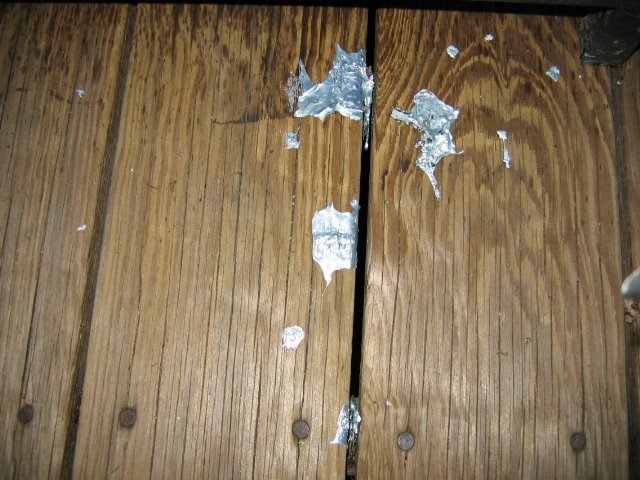
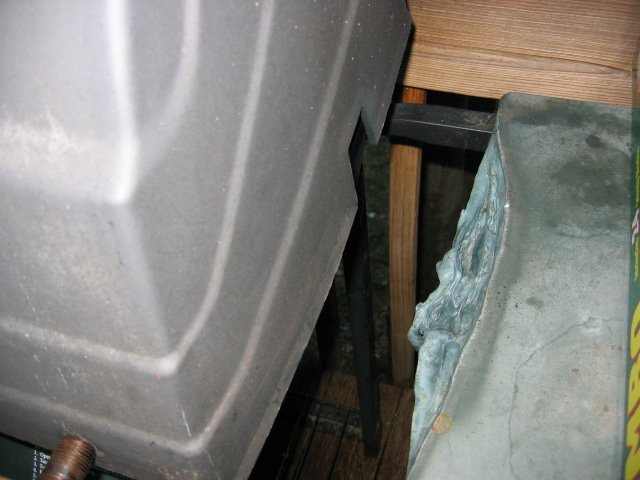
I now have liquid metal (solder?) which dripped down onto the deck. The logo thing on the grill melted down half around the thermometer - which cracked from the heat. This sagged because the bolt and screw that held on melted! Plastic tray to the side? Melted away from the grill. Here are some pictures.


Anyhow - we're glad to still be alive. My advice to you is - be lazy. Wait to clean your grill until the next time. Or, I guess some of the non-flavor merits of charcoal: non-explosive, self-extinguishing.

Those aren't bad.


Tuesday, August 01, 2006

More than Echos


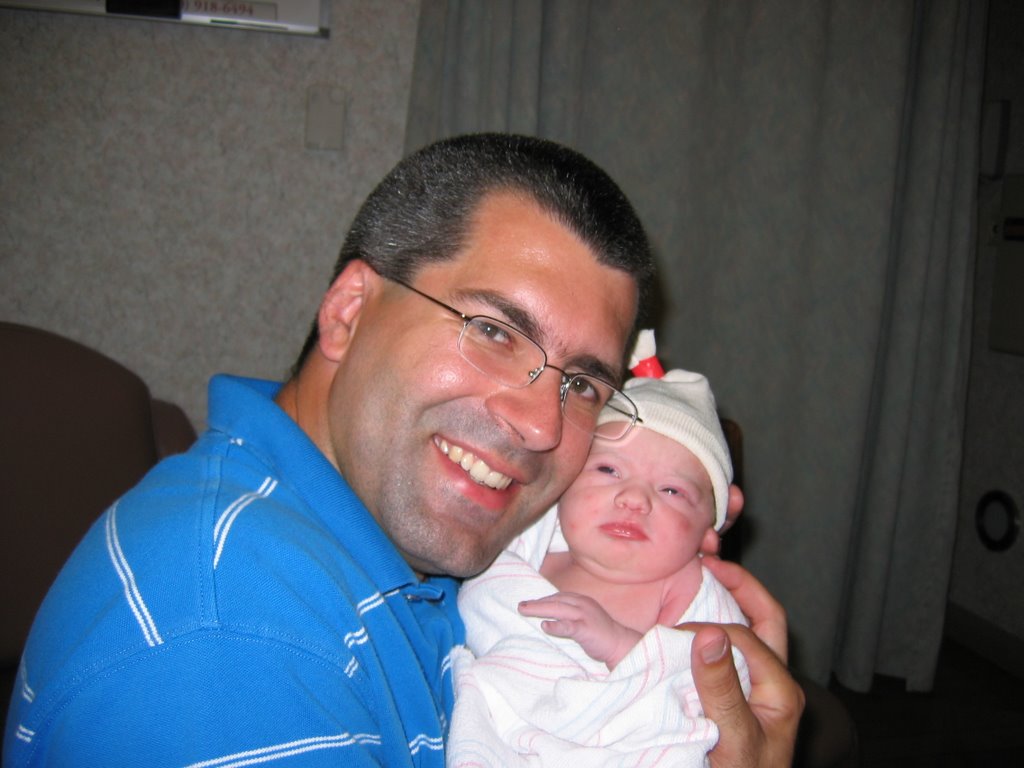
My 2nd child was born just a week ago. Hannah. She's beautiful and my wife and I are thrilled. Even our son (2) seems to think she's pretty interesting. (we'll see if that one lasts!)

A thought that has been bouncing around in my head as I awaited her birth - how remarkable it is that my wife and I have created a life, and how significant that life is.

My worldview (which, though this seems intolerant in the present day; I think is the right one) has near its core the concept that we are eternal. We have souls that are enduring forever and life here and now in the world is but a foreshadow of the future one. We are not the source of our un-endingness, but have our very lives as a gift from God, and part of that gift includes eternity.

Anyway, with that worldview in mind, here is what is remarkable to me: My wife and I have now had a part in the creation of 2 eternal beings. For all eternity, there will be 2 additional persons that would not have existed if Rachael and I had not created them. (granted, our part is quite small in that act of creation, and still wholly dependent on God)

This might seem like a "well, duh" to you, but it really strikes me. I truly can shape the eternal future. Isn't that amazing? Our choice to have children will have real, direct and permanent effect on all of time. Forever will look different because we lived and loved and had kiddos.

When the bible talks about man being made in God's image this includes both being eternal, but also being a creator. Together, my wife and I have the capacity to create another life - one that will exist forever.

That is wild to me.

My life matters. The choices I make matter - not just in their immediate context and interactions, but forever! There are impacts and implications that will not be "echos in eternity" as the line from Gladiator goes, but they will be concretely eternal. I matter. My life matters. My choices matter - forever.

It's also interesting to me that having this temporary life here leading up to an eternal life elsewhere does not diminish this life's importance - quite the opposite. In this short span on earth, I will shape, to a humble degree, what that eternity will be like. This life is of gargantuine importance! It's a limited opportunity to make eternal impact.

Anything less cheapens it. I recently watched Aeon Flux. (which turned out better than it started) Without spoiling it, you realize that they are dealing with questions of immortality, quality of life and legacy. At the end there is a line that says "we're meant to die, and our job is to do the best we can and hope that the next generation will do better." (paraphrased)

This initially sounds poetic and true, but as I think about it - it's not. Just because death happens doesn't mean it's what's supposed to be. If it is supposed to be, why is it continually, in all cultures such a shock, a source of distress, a heart wrenching dissappointment? It certainly doesn't feel like it's the natural order of things. People throughout time have taken the opposite stance - regardless of culture or religious views. People cling to life, they strive to be cured of diseases, defy aging. Then they weep and somehow feel cheated when a mother, sister, son are taken away. It's not what we're meant for - we're meant to live. Death is completely unnatural.

Then, if my existence ends when I die and my hope is that the next generation to do better - well, that doesn't feel right either. If I no longer exist after I die - what do I care comes after me? There is zero benefit to me whether I have lived as a noble king or wretched pauper. If I'd been a self sacrificing saint or just sought my own personal comfort at the expense of others. It's irrelevant.

For the next generation then, the only concern I might have are for my kids and direct family. Other than that, I don't really care about anyone else. Why should I? (if I had that world view) But really - why will my kid's quality or quantity of life matter? If there is nothing after life here, then it doesn't really matter what life here was like - ultimately. If my kids live a great life, cure cancer, help countless poor and destitute and have monuments and statues named after them - what's the difference? They may as well have been murderous monsters if there is nothing after death. Ultimately, at the end of the human race our lives made no difference, because there isn't a greater context than the one we're in.

If there is just this life to lead and nothing afterward - all things to which we ascribe meaning and morality ultimately meaningless. All notions of purpose will be consumed by non-existence.

This isn't how people innately live either. People generally have a sense that what they do matters. They have a sense that there is a purpose to life. (even if they're not sure what it is, they still have a sense that there's one to be found) They have a sense that they could possibly do things that will outlast them.

Anyhow - with both my children, when they were born my first thoughts surrounded the idea of "potential." From their first minute of life I marveled that they too will have a hand in shaping eternity - hopfully with waves of goodness, nobility and selflessness. It will be their choice in the time they have here on earth.

I don't know how long they have, but I know that they whatever they choose to do will have much more than "echos in eternity" - They'll create very real, very lasting effects. I can't wait to see what they will be.

I think I'll go give them each a kiss and tell them how much and how long their little lives matter.

Tuesday, July 18, 2006

My Comment to Gum-Land (Breyer's)

You might think I'm crazy for how much I am bothered by this, but that's fine with me.

I am disturbed by Breyer's Ice Cream and the changes they have made to their products. I recently noticed a change in texture and taste of their ice creams. With a little looking around I found out that they have suddenly added gums as fillers/binders - this after 130+ years without it.

I am perplexed and disturbed. I loved the quality, which they have compromised. What also bothers me is that they've snuck it in. Why after all these years?

I'm sure it's great for profit. Same prices, cheaper ingredients. (albeit reduced quality - but they're probably thinking no on will notice) But I don't like gummy ice cream, and Breyers was a source of much joy to me.

So - since I am crazy, I thought it might do me some cathartic good to let them know how I feel. The comment/letter I just sent them is copied below. Maybe I'm the only one who's noticed, or who cares.

-------


In the last year, I've noticed a change in the consistency and taste of your Breyers Products. It took me a little while to figure it out, and the answer has left me disappointed.

I'm a bit of an ice cream purist, and have loved Breyer's products. Simple quality ingredients = great ice cream. You were in a class of your own.

What I discovered recently was that you've incorporated gums into your ice creams. I had a several-year-old plastic tub of vanilla in my basement which I used as a storage container. When I compared ingredients with a recent box of vanilla, I saw the change. "Natural Carob Bean Gum."

You've joined the world of gummy ice cream.

I noticed a difference the first time. As did my sister & other friends. I'm doing them the service of showing them how the texture and flavor of a once great ice cream has been compromised. What I can't tell them is why.

Perhaps I am niave, but in my mind a great product will yield profitability. People know the difference, and quality stands the test of time. Perhaps there has been a fundamental value shift in your company? You've moved on from primacy of quality to profitability?

I'm moving on as well. You're now in the gum class, and I'll be looking for someone else to make a "pure" product. You've lost me.

BTW- the Double Churn campaign is a joke in my home. When we see the commercials we just shake our heads. Apparently creamy and gummy are synonymous to you.

We're not fooled. Good luck.


NOTE: Breyer's Promptly responded with a letter, and a coupon for free $5 worth of free ice cream. Apparently when you complain about low quality, they offer you more.
My wife read the letter to me over the phone while I was at work. Sadly, she then threw it away. I had hoped to post their reply here, so that no one could read it. (no one reads my blog) Alas.
So the gist of why they added gum was this: "quality control" They said that since they could not control whether or not the ice cream was maintained at proper temperatures during shipping, unloading, stocking, sale and trip to consumer's home, they made the decision to add "natural" stuff (gum) to help maintain it's texture...or something.
Whatever. If people were calling in because their ice cream melted a little on the way home - I'd say "shop closer to home." Or "why don't you get your frozen foods last when you shop. They'll melt less. And stop chewing with your mouth open - that's disgusting!"

Either way, I'm sad. The bright spot? In this area I can get a few kind of flavors of ice cream from Turkey Hill which are just the pure stuff. It's called "Philadelphia Style" and hooray for the Fatties in Philly. At least someone knows how to make gum-less ice cream.

So - bye bye Breyer's. And the Double Churn Commercials are still just double the joke.


Sadly - John.

Thursday, June 15, 2006

A Deep Question

I have often speculated about a possibility for the afterlife that may be deep. Here it is, and think how this would truly demonstrate the Justice of God. (Or simply demonstrate that I don't use my time for productive pursuits - case in point: blogging)


Are Cat Hell and Dog Heaven the same place?
.
.
And there you have it. My deep thought and my shortest entry - All in one and all for you, my imaginary reader.

Tuesday, April 18, 2006

Breaking the Magic

Ba-zillions of dollar are spent by companies each year to compel the consumers of America that their products are truly necessary. After years of television, marketing experts have honed their craft to a point of magic. The know how to cast spells on the bulk of humanity. And it seems that those spells are pretty effective.

I find most of this bewitching to be pretty hilarious. I'm probably not the only one.

I just watched a hair dye commercial. I myself could be considered a candidate for such a product. I'm not that old, but my hair is a nearly-black color, and the white hairs seem to be multiplying around the sides. (oddly, and annoyingly enough - the white ones actually grow faster than the dark ones. Which, for my monthly hair buzzing means that I have little white wings protruding all over the place.) My hair is beginning the graying process, and people are starting to notice - and verbalizing it to me.

So I am in that target group - the still young guy who is suddenly becoming gray niche. This and many commercials could grab me. They don't.

For me, I break the magic through one or two methods.

1. When I watch a commercial, I ask myself "What is the literal message that the imagery would lead me to believe." or "What is being visually communicated."

2. I often ask these questions and watch the commercial with the volume muted. This way I can focus on what the images are telling me, rather than being told about the product. Most commercials are selling a feeling or an idea - and the product is tied to that emotion.

So - for instance - tonight I watched a few commercials in this way. The most stunningly ridiculous was in fact....the hair dye bit.

An unhappy, frowning man with some gray hair applies the product. Suddenly, there is a gorgeous, significantly younger, nymphomaniacle women who is all over him. He's now happy, desirable and he takes her to his home where he is tackled on the bed by her - breasts pressing him down - as he turns off the lights. Implied sex ensues.

Real message of commercial: Our product will get you sex with hot women.

Of course - that's not what the product is for. That's just what the subtext of the product is saying. That's the emotion they're appealing to. "This product will make you more desirable, it will make you feel younger, and look younger."

So what, you say. That's consumerism. Well, what's really going on isn't a positive. Here's why.

I think that much of our consumerism is built upon the foundation of fear. Think about this for a moment. How many products could you name that are targeted to counter just these 3 fears/concerns?

1. Reduced attractiveness/desirability
2. Physical Signs of Aging
3. Unhealthy Habits/Lifestyles

With just those three, I'll bet you'd fill a sheet of paper if you watched an average day's TV and kept a running list. It's amazing!

Here's my profound caveat: The problem is the solution.

The solution that these commercials offer is problematic. They address deep, broadly felt and very much real fears. People are aging. Our culture does have an unhealthy value on looking right. We do judge people by their sexual desirability. We do become sick. Some of us do need more money. We are overweight and unheathy. We're bored. We have serious medical conditions. We will disappoint, deteriorate, and die.

But the solutions these products offer up against those fears are, at best, superficial. They don't deal with the real problem - just the external perceptions. The problem isn't that my hair is gray, the problem is that my life is short, and these white hairs are a visible sign that my time is running out.

What I'm afraid is happening is that we are deluding ourselves. We think that these products can somehow save us from the real issues. And distracting yourself from a real problem through a temporary and superficial solution is no solution at all.

I am getting older. (So are you!) I could spend my mental energies, money and time seeking solutions to fight that. (hair dye, diet pills, cosmetic surgery..etc) But if that's been my focus, it still won't change that reality. What it will do is prevent me from asking better questions.

Questions like: What legacy will I lead my children? What am I doing today that will outlast me - have a positive effect on future generations. What things, if I don't do them now, will I wish I had done when I am old. Have I considered my eternal destiny - God, faith, and the afterlife? What are the most important things - what should I live for? What AM I living for now?! Will I have regrets based on the way I am living now?

But we aren't asking those questions. We're spellbound. Bewitched by the empty promises we see played out before us. Our hearts are captured by the possibility of being cool, or being found sexy. We're worried that we're looking more wrinkled, fatter, older. (we are) I could be more significant with a new car, a new technology toy. I could save a few dollars with this offer, this company, this product. I could be seen as younger, cooler, wiser, wealthier, smarter, happier if only I...

Snap out of it! Happiness is never found in externals but in eternals. And life is definitely not in what other people think of those externals. Decode those slick tricks, those crafted commercials. Watch them with the volume off. (better yet just turn them off!) Evaluate their promises. They're absurd.

No. Find out what will last, seek God, seek eternity, seek real life, seek wisdom to live today. Life is now - but it might not be tomorrow. Make the most of it. Turn off the TV and live what you've got.

I'm letting my grays show. They're real, and they are reminders. (My wife thinks they're sexy!)

Tuesday, March 28, 2006

Peter Parker's Good Fortune

With the advent of widespread popularity of SuperHeroDom in movies and general culture, many have become familiar with "lesser knowns" of these characters. (indeed - the massive attraction to the superhero architype would be an interesting study from a sociological perspective - is this a felt need? A replacement of God, or a re-packaging of Greco-Roman mythology?)

For many, there seems to be some bizarre delivery of their powers. Through sometimes odd circumstances, normal people wind up with some new or augmented abilities. (if this is reoccuring mythology, the shift seems to have gone from "the gods are like us" to "we are becoming the gods." This too would be an interesting thing to explore, if it's there.) The Hulk, Wolverine, Fantastic 4...etc.

One such transformation that has long puzzled me is Peter Parker into Spider-man.

I am not so much confused by the premise of how he gets his powers, but more so at the tremendously good fortune Peter Parker had in receiving the augmentations/manifestations of spidery attributes that he did.

Consider his gifting: amazing strength and durability, augmented reactions, ability to adhere to and climb walls, webs spinning and his "spidey sense."

Why is it that Peter Parker only gets the good stuff? Consider some of the other possible attributes arachnae; independant mandbiles with poison laden fangs, 8 eyes, complete body hair, 8 seven-jointed legs, and the junk in the trunk: an enormous abdomen.

Similarly, his positive changes could have manifested very differently. What if his durability also came with an exoskeleton? How fortunate for him that his web slinging ability was in his wrists/hands and he doesn't just shoot spiderwebs out of his butt. (imagine him swinging around the city by his butt - doesn't quite inspire the same awe and respect, does it?)

[here I will grant my lack of superhero knowledge and say - I think in the 70's cartoon, he actually had a device that produced the spider silk for him, (market that Peter!) whereas in the recent movies, it was an anatomical feature. Which is true to the original, I do not know. But I do know that the mental image of spiderman swinging around by his butt is a irreducable souce of amusement for me]

So - Peter Parker: most fortunate of superheroes.

Though it's not shown, I'm sure he must have a strong penchant for eating flies.

Thursday, March 23, 2006

What Katrina Victims Taught Me

Most things here in New Orleans are not very well populated. There aren’t a lot of stores open, and many of the residents of some city sections are not back yet. Yet, there seem to be at least 2 places that are up and running - and very well populated.

In the first category are the churches. They have become recovery centers, food distribution points and temporary homes for out of state volunteers. Right now I am staying in a tent city run by a local group of churches. Good News Camp. There are 600 here. All kinds of people come here each day to be fed, cared for and ministered to.

In the second category are the bars. They are also well populated and may have been some of the first stores to be up and running. (judging by the quantity I’ve seen) They also attract people of all types. They are all over the city.

One could argue that, in some way, both of these places are serving the same purpose: escape from the pain of the present.

The bars offer something to numb that pain. Through alcohol, some people are able to escape from the depression, the loneliness, the hopelessness - by forgetting. Though only for a few hours, (or in some cases an entire evening)

The churches and relief efforts also offer an escape from the current pain. People let their hearts and minds escape to the future - to the possibility of something better than today.
They can move past their harsh present by dwelling on a better future.

Both means allow people to cope, but they are not equal.

Alcohol, though it may provide an escape, produces nothing. After the temporary relief, the user must return to the same reality - nothing has been done to change it. If the bars or the bottle are my method of dealing with unpleasant reality, there is little possibility of that reality changing. I will need to numb myself to that reality again tomorrow.

Faith and Hope, on the other hand, empower the heart to action. If I believe that a better day awaits me tomorrow and the day after that, I can participate in bringing it about now. I need not be debilitated by it. Hope trumps despair. It allows the bearer to continue on, fully acknowledging reality and moving despite it.

We had many opportunities to hear from some of the hardest hit residents of New Orleans. Some were deeply embittered. Some were defiantly hopeful. The contrast was wide.

Ida Mae, and elderly women whose home we gutted, told us about the 4 months she was away from New Orleans. She lived one week at a time in various places, than settled in for 2 months in Texas before she could come to a relative’s apartment in the city.

She was a hopeful one. She was fun to be with. She talked with us about how bright the future of her city could be. She was grateful for all that she still had. (it fit in one suitcase) She seemed to be grateful now for what had not yet come.

Others told us that if you live in New Orleans, you really need to drink in order to deal with it. They were not so hopeful. Nor were they very pleasant. They seemed to focus on what won’t fix itself and who was to blame. They could not see a better future. They had no hope, other than to avoid the problems.

I wish I were more like Ida Mae, but I fear I fall into the numbness category. I’m not living in a disaster zone but I don’t really need to be. I seek to escape and distract and numb myself from the shadowy parts of my life.

What if each of us faced the dark parts of ourselves with the perspective of faith and hope? What if we were unwilling to ignore, numb and distract ourselves from our own badness? Could we simultaneously acknowledge our 'sinfulness' and embrace a solution? (a whole other discussion is whether we need outside help to make it better!) What might the solution look like?

These things are worth thinking about - for all of us. And they are worth doing something about - for all of us.